Cooking can feel like a daunting task, but mastering basic techniques is the secret sauce to culinary confidence. Whether you’re a novice hoping to impress friends or a seasoned chef looking to refine skills, understanding the fundamentals can transform any meal from bland to grand.
Basic Cooking Techniques
Mastering basic cooking techniques enhances culinary skills. Understanding methods such as boiling, sautéing, and roasting forms the foundation for any cook.
Boiling involves cooking food in water or broth at high temperatures. This method is effective for making pasta and boiling vegetables. For example, pasta reaches optimal texture in about 8 to 12 minutes.
Sautéing cooks food quickly over medium to high heat in a small amount of fat. This technique works well for vegetables and proteins. Chopping ingredients into uniform sizes promotes even cooking, ensuring flavors meld beautifully.
Roasting uses dry heat in an oven, creating rich flavors and textures. Vegetables and meats caramelize at high temperatures, enhancing taste. A whole chicken roasted at 375°F for about 1.5 hours achieves a crispy exterior and tender interior.
Baking applies dry heat for dishes like bread and desserts. Precise measurements and temperatures play critical roles in success. Most cakes require baking at 350°F for 25 to 30 minutes.
Grilling applies direct heat, producing distinct charred flavors. This technique suits meats and vegetables alike. Marinating ingredients before grilling deepens flavors, making them truly enjoyable.
Steaming cooks food using water vapor, preserving nutrients. This method works great for fish and vegetables, keeping them tender yet firm.
Familiarity with these techniques leads to increased culinary confidence. Each method presents unique opportunities for creativity and flavor development. Embracing these basic techniques allows for meal preparation that ranges from simple to complex.
Preparation Techniques
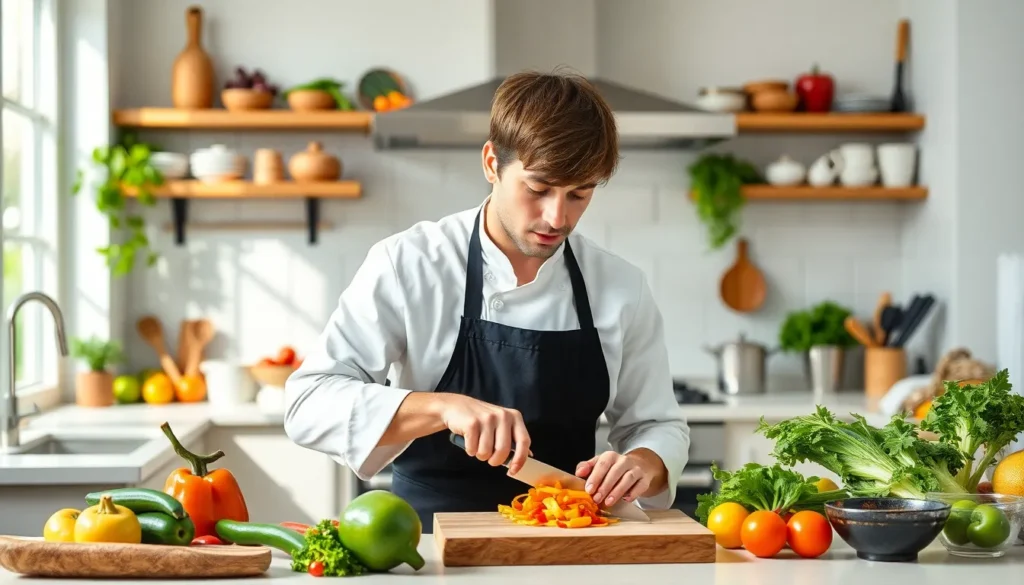
Preparation techniques form the foundation of successful cooking. Mastering these skills greatly enhances culinary outcomes.
Knife Skills
Knife skills play a crucial role in food preparation. They impact not only the speed of cooking but also presentation quality. Basic cuts include dicing, slicing, and mincing, which help achieve even cooking and enhance flavor release. Precision in cutting leads to uniform cooking times, ensuring dishes cook evenly. Maintaining a sharp knife improves efficiency and safety, as dull knives require more force and invite accidents. Practicing different knife techniques enables cooks to handle various ingredients effectively, from vegetables to meats. As familiarity with knife skills grows, confidence in the kitchen also increases.
Measuring Ingredients
Measuring ingredients accurately is essential for recipe success. Consistency relies on precise measurement, especially in baking where small variances can affect outcomes. Common measuring tools include dry measuring cups, liquid measuring cups, and kitchen scales. Using dry measuring cups for solids ensures no air pockets disrupt portion sizes. Liquid measuring cups provide clear measurements for liquids with easy-to-read markings. Weighing ingredients eliminates guesswork in portioning and yields the best results. As cooks refine their measuring techniques, they build a solid foundation for executing recipes correctly.
Cooking Methods
Basic cooking methods can be categorized into dry heat and moist heat techniques. Mastering these methods enhances flavor and texture in various dishes.
Dry Heat Cooking
Dry heat cooking techniques involve cooking food without added moisture. This approach includes methods like roasting, baking, grilling, and sautéing. Roasting takes place in an oven and develops a rich flavor through caramelization. Baking often applies to bread and pastries, requiring precise ingredient measurements for optimal results. Grilling uses direct heat and produces charred, smoky flavors that many find appealing. Sautéing entails cooking food quickly in a small amount of fat over medium to high heat, effectively enhancing the dish’s flavors while preserving textures.
Moist Heat Cooking
Moist heat cooking techniques utilize liquid or steam to cook food. Boiling and steaming are prime examples of this method. Boiling cooks pasta and vegetables efficiently, ensuring thorough cooking and ease of preparation. Steaming maintains nutrients in food while providing a gentle method for cooking fish or vegetables. Braising represents another moist heat technique, involving slow cooking in a covered pot with liquid. This method tenderizes tougher cuts of meat and infuses them with flavor. Each moist heat method emphasizes different qualities in food, allowing for creativity and diversity in meal preparation.
Flavoring Techniques
Flavoring techniques transform dishes from bland to remarkable. These methods enhance taste and elevate overall culinary experiences.
Seasoning Basics
Seasoning creates a balance in flavors. Salt is fundamental, accentuating sweetness and reducing bitterness. Pepper adds warmth and complexity, enhancing a dish’s depth. Additional seasonings, like garlic powder and onion powder, introduce savory undertones. Acidic ingredients such as vinegar or citrus juice brighten flavors, while sugar can counterbalance acidity. Applying the right amount of seasoning is crucial; too little fails to enhance, while too much overwhelms. Understanding when to season—during cooking or at the end—profoundly affects the final taste.
Herb and Spice Usage
Herbs and spices provide unique flavor profiles. Fresh herbs like basil, cilantro, and parsley add brightness and freshness to dishes. Using dried herbs, such as oregano and thyme, intensifies flavor but requires careful measurement due to differences in potency. Spices like cumin, paprika, and cinnamon can transform dishes with their earthy and warm tones. Combining herbs and spices creates distinct blends that can reflect various cuisines. Knowing how to toast spices releases essential oils, enhancing their fragrance and taste. Effective use of herbs and spices can elevate simple recipes to gourmet creations.
Presentation Tips
Presentation plays a crucial role in making dishes visually appealing. Focus on colors, textures, and shapes when arranging food on a plate. Use contrasting colors, such as a vibrant green vegetable against a neutral base, to create an inviting meal. Enhance texture by mixing crispy elements with softer components, ensuring a pleasing mouthfeel.
Garnishing provides an excellent opportunity to elevate the dish’s presentation. Fresh herbs, edible flowers, or microgreens can add a pop of color and a touch of sophistication. Additionally, creative plating techniques can transform ordinary dishes into works of art. Employ techniques such as stacking ingredients or creating height for visual interest.
Proportion matters in presentation. Arrange food in balanced servings, avoiding overcrowding on the plate. Consider the rule of thirds, which divides the plate into sections to guide placement. Minimalistic designs can draw attention to the main components, allowing flavors to shine.
Serving dishes can impact the overall appearance as well. Select plates that complement the meal, such as white plates for vibrant dishes or rustic platters for hearty fare. A clean and polished appearance goes a long way in impressing guests; wipe down the edges of plates before serving.
Finally, timing is essential when presenting a dish. Serve food promptly to maintain the best texture and temperature. Ingredients such as sauces should be added just before serving to keep their freshness intact. Sprinkling finishing touches right before plating can enhance the dish’s appeal.
Mastering basic cooking techniques is essential for anyone looking to improve their culinary skills. These foundational methods not only enhance the flavor and texture of dishes but also boost confidence in the kitchen. As individuals practice and refine their skills in boiling, sautéing, roasting, and more, they’ll discover the joy of creativity in meal preparation.
Effective use of flavoring techniques and presentation skills further elevates the dining experience. By focusing on the balance of flavors and the visual appeal of dishes, cooks can transform everyday meals into extraordinary culinary creations. Embracing these principles will lead to a more enjoyable and rewarding cooking journey.