Chinese cooking techniques are a culinary treasure trove waiting to be explored. From the art of stir-frying to the delicate dance of steaming, these methods not only elevate flavors but also showcase the rich cultural heritage behind each dish. Imagine the sizzle of a hot wok as it transforms fresh ingredients into a mouthwatering masterpiece—it’s like a culinary symphony where every note counts.
Overview of Chinese Cooking Techniques
Chinese cooking techniques showcase a variety of methods that highlight the cuisine’s depth. Stir-frying represents a fundamental technique, known for its fast cooking at high heat, which preserves vegetables’ crispness and enhances flavors. Steaming, another popular method, offers a healthy alternative that maintains food’s natural moisture and nutrients, ideal for fish and vegetables.
Braised dishes deliver rich flavors through slow cooking in a flavorful liquid. This technique allows ingredients to absorb the seasoning, creating a multi-layered taste experience that captures attention. Roasting, common in various regions, produces deep flavors and textures, often seen in dishes like Peking duck.
The art of potstickers exemplifies the technique of pan-frying, where dumplings gain a crispy bottom while remaining tender on top. Each method contributes unique qualities, leading to a harmonious blend of tastes and textures in Chinese cuisine. Simmering focuses on extracting flavors from meat and bones, forming rich broths that serve as base for soups.
Wok cooking emphasizes versatility and high heat, with seasoned woks developing non-stick properties over time. Different regions utilize specific techniques such as smoking or pickling, reflecting local resources and cultural influences. Fermentation creates umami flavors, especially notable in sauces and condiments, enhancing the overall dish quality.
Through these diverse techniques, Chinese cooking embraces a philosophy that values balance, texture, and taste. Each method holds cultural significance and speaks to the culinary artistry found in preparing traditional dishes. These techniques not only preserve flavors but also create unique dining experiences that continue to evolve.
Stir-Frying
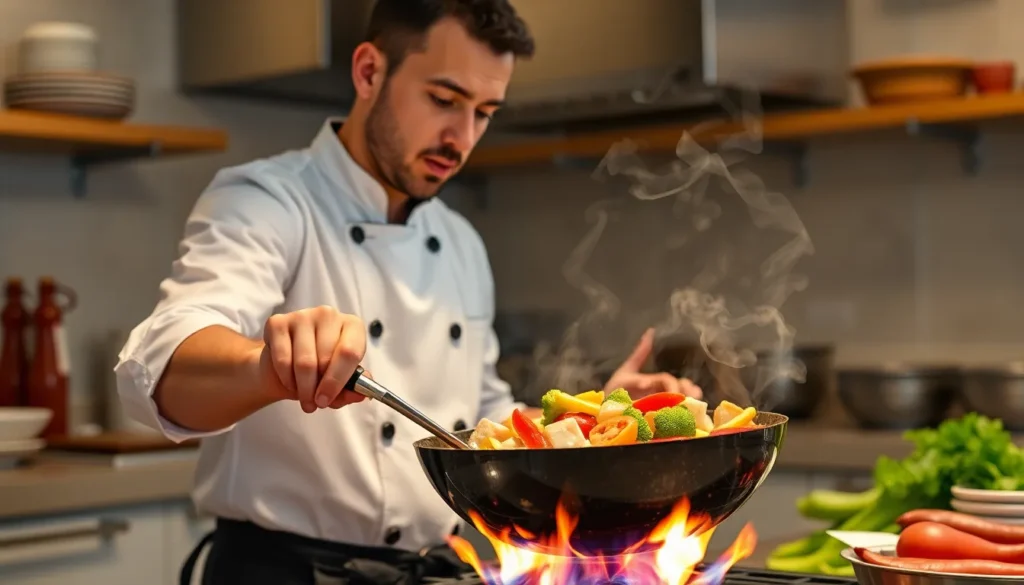
Stir-frying is a cornerstone of Chinese cooking, known for its speed and ability to lock in flavors and nutrients. This technique uses high heat and minimal oil to create vibrant, textured dishes that highlight fresh ingredients.
Essential Equipment
A wok stands as the primary tool for stir-frying, designed to distribute heat evenly. Its round bottom allows for quick cooking and tossing, key components of this technique. Using a spatula or wooden spoon facilitates flipping ingredients, ensuring even cooking. A well-seasoned wok enhances flavor, while a lid can help with steaming when necessary. Additionally, using a burner with high BTU output allows for maintaining the required heat.
Common Ingredients
Fresh vegetables such as bell peppers, broccoli, and carrots frequently appear in stir-fry dishes. Proteins like chicken, beef, and shrimp provide richness and versatility. Aromatics such as garlic, ginger, and scallions add depth to flavors. Soy sauce, oyster sauce, and rice vinegar serve as fundamental seasonings, achieving balance in taste. Ingredients like tofu not only cater to various dietary preferences but also absorb surrounding flavors, enhancing the dish’s overall profile.
Steaming
Steaming stands out as one of the healthiest methods in Chinese cooking. It preserves natural flavors and nutrients, making it a favored technique among many.
Benefits of Steaming
Steaming offers numerous health advantages. It retains vitamins and minerals better than boiling or frying, producing more nutritious meals. With minimal added fats, steaming supports weight management. The technique enhances flavors without overpowering, allowing the natural essence of ingredients to shine. It also promotes even cooking, ensuring proteins are tender and vegetables crisp. Adopting this technique can lead to a more balanced diet while providing rich taste experiences.
Popular Steamed Dishes
Several dishes highlight the benefits of steaming in Chinese cuisine. Dim sum dumplings often feature meat and vegetables wrapped in delicate dough, served with dipping sauces. Another classic, xiao long bao, showcases thin dumplings filled with savory broth and pork. Steamed fish with ginger and scallions exemplifies fresh flavors and minimal seasoning, accentuating the fish’s quality. Additionally, lotus leaf rice bundles rice, mushrooms, and meats, delivering aromatic tastes. Each dish reflects the artistry and precision associated with steaming, contributing to the diversity of Chinese culinary traditions.
Braising
Braising creates rich, complex flavors through a slow cooking process. This technique combines both moist and dry heat, allowing meats and vegetables to become tender and flavorful.
Techniques for Perfect Braising
To achieve perfect braising, start with browning the meat in an oil-coated pan. Next, add aromatics such as onions, garlic, and ginger for depth. After that, introduce liquid, which could be broth, wine, or a combination of both. Cover the dish during cooking to trap steam and enhance flavor. Maintain a low heat throughout the process, keeping the dish simmering gently. Finally, ensure the cooking time aligns with the ingredients used for optimal tenderness.
Ingredients for Braising
Key ingredients for braising include tougher cuts of meat like chuck roast or pork shoulder. Vegetables such as carrots, potatoes, and mushrooms also contribute to the dish’s character. Liquid options encompass stock, wine, or even soy sauce, each enhancing the dish’s complexity. Additionally, aromatic herbs like bay leaves, star anise, and thyme infuse the dish with fragrance. Choosing the right combination creates a harmony of flavor, essential for an unforgettable braising experience.
Roasting
Roasting stands out as a key technique in Chinese culinary traditions, celebrated for creating deep, savory flavors and appealing textures. This method often involves high heat, ensuring that meats and vegetables develop rich, caramelized surfaces while maintaining moisture inside.
Traditional Roasting Methods
Traditional Chinese roasting methods often employ a wood or charcoal fire, enhancing flavor through smoke infusion. Techniques include hanging meats in a well-ventilated area, allowing them to develop a crispy skin and complex taste over time. Some kitchens use specialized ovens to achieve optimal results, balancing heat and airflow. Familiar examples include roasted meats like duck or pork, prepared with marinating spices to enhance aroma. Many chefs also incorporate aromatic woods during roasting, infusing dishes with unique flavors.
Influential Roasted Dishes
Several iconic roasted dishes showcase the importance of this technique in Chinese cuisine. Peking duck represents a culinary masterpiece with its perfectly crispy skin and tender meat, often served with thin pancakes and hoisin sauce. Char siu, or Cantonese BBQ pork, features a sweet glaze that caramelizes beautifully during roasting. Another notable dish is roast goose, characterized by its rich flavor and crispy exterior, frequently accompanied by plum sauce. Moreover, roasted vegetables for side dishes, such as eggplant and bell peppers, provide a delightful contrast to meats, enhancing overall dining experiences.
Chinese cooking techniques offer a fascinating glimpse into a rich culinary tradition. Each method from stir-frying to steaming showcases not just the artistry of the cuisine but also the deep cultural roots that influence it. The balance of flavors and textures achieved through these techniques creates memorable dining experiences.
As home cooks explore these methods they’ll discover the versatility and health benefits inherent in Chinese cuisine. Embracing these techniques not only enhances culinary skills but also fosters a deeper appreciation for the flavors and traditions that define Chinese cooking. Whether preparing a simple stir-fry or an elaborate braised dish, the journey through these techniques is sure to inspire and delight.